
Why First-Time Managers Need Leadership Training, Not Just a Promotion
There’s a well-documented pattern in organisational psychology sometimes called the “Peter Principle” the tendency for people to be promoted based on excellence in their current role,right up until they reach a role that requires an entirely different set of skills, where they then struggle. Nowhere is this more common, or more consequential, than the jump from individual contributor to first-time manager.
The Skills Gap No One Talks About Enough
Someone promoted into their first management role is usually excellent at the technical work of their previous job closing deals, writing code, managing projects, delivering results individually. None of that expertise directly prepares them for what management actually requires: delegating work they could do faster themselves, giving feedback that might be uncomfortable to deliver, managing conflict between team members, making decisions that affect other people’s careers and wellbeing, and building trust with a team that’s watching their every move for signs of whether this new manager is actually capable.
This gap is rarely addressed with the seriousness it deserves. Many organisations still treat the shift from individual contributor to manager as something people should intuitively figure out, perhaps with the help of an on boarding deck and a mentor they meet with occasionally. That’s a significant, often costly, underestimate of how difficult this transition genuinely is.
The Real Cost of Getting This Wrong
Poorly supported first-time managers don’t just struggle personally the cost ripples outward. Teams under an undertrained new manager often see increased attrition, since a manager relationship is consistently one of the strongest predictors of whether an employee stays or leaves. Decision-making slows because a new manager, unsure of their own authority, either over-controls everything or avoids making calls at all. Team morale often dips as people sense their manager is uncertain, even if that uncertainty is never explicitly stated.
These costs are usually invisible in the short term and show up months later as attrition numbers, disengagement scores, or missed targets by which point it’s much harder to trace the root cause back to an unsupported management transition that happened quietly, without much organisational attention, six months earlier.
Why Classroom Training Alone Doesn’t Close This Gap
The instinct to address this with a management fundamentals workshop is understandable, but classroom training tends to transfer information frameworks for giving feedback, models of delegation without building the actual instinct to apply that information under real pressure. A new manager can learn the theory of a difficult conversation perfectly and still freeze when they’re actually sitting across from an underperforming team member for the first time, because knowing what to say and being able to say it calmly, in the moment, under real discomfort, are different skills entirely.
What Actually Builds Management Confidence
Confidence in a new skill comes from practicing it under conditions that feel real enough to matter, then getting specific, honest feedback on what happened not from being told the theory and hoping it translates. This is the core reason experiential leadership development tends to outperform purely classroom-based management training for first-time managers specifically.
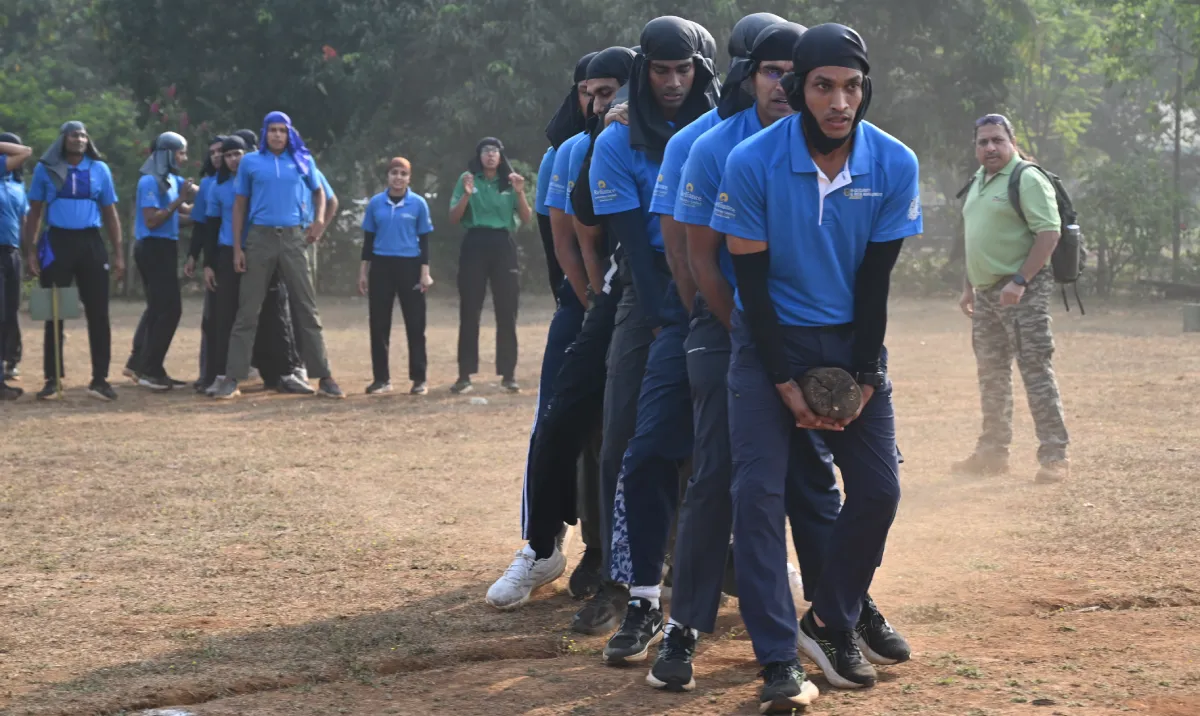
At Empower Activity Camps, our leadership modules put new and aspiring managers into structured challenges where they have to make real decisions, delegate under time pressure, and manage a group’s reaction when a plan doesn’t go as expected all within a controlled, safe outdoor environment where the consequences of a mistake are limited to the exercise itself, not a real team member’s career. What they discover about their own instincts in that moment do they take over instead of trusting their team, do they avoid giving a clear instruction because they’re worried about being wrong, do they communicate expectations clearly or assume people will just understand is far more useful and far more honest than anything a workshop on “delegation styles” could tell them.
The Value of Facilitators with Real Command Experience for This Specific Transition
The transition into a first leadership role has a particular emotional texture self-doubt, fear of being seen as incompetent, uncertainty about how much authority to actually claim. Facilitators with genuine command experience, who have themselves navigated the jump into leading people for the first time under far higher stakes, tend to recognise this pattern immediately and can speak to it with real credibility, rather than relying purely on textbook frameworks about “imposter syndrome in new managers.”
What a Good First-Time Manager Program Should
- Include Real decision-making practice under time pressure, not hypothetical case studies, so thediscomfort of committing to a call under uncertainty is genuinely felt and worked through.
- Structured, specific debriefs that name exact moments “when the plan started failing, you took the task back yourself instead of asking your team what they were seeing” rather than generic encouragement, since specificity is what actually helps someone recognise and change a pattern.
- Peer learning alongside other first-time managers, since much of the anxiety in this transition comes from feeling alone in the struggle; seeing peers wrestle with the same hesitations normalises the difficulty and builds a support network that outlasts the program itself.
- A follow-through mechanism, ideally involving check-ins with a manager or mentor over the following weeks, since insight from a single program fades quickly without reinforcement back at work.
Why This Investment Pays for Itself
The cost of leaving first-time managers unsupported shows up, eventually, as attrition, disengagement, and missed performance costs that are almost always larger than the cost of a well-designed leadership development program up front. Organisations that invest deliberately in this specific transition tend to see stronger retention on the teams those new managers lead, faster ramp-up to full management competence, and fewer of the quiet, hard-to-trace performance issues that stem from an unsupported manager simply doing their best with no real preparation.
Where to Start
If your organisation promotes people into management without any structured support beyond a title change and an on boarding document, that’s worth revisiting directly, ideally before the next round of promotions rather than after problems have already surfaced. A well-designed leadership development program for first-time managers one built around genuine practice under real pressure, with specific, credible feedback, not just theory is one of the highest-leverage investments an organisation can make, precisely because the cost of getting this particular transition wrong compounds quietly for a very long time before anyone notices where it actually started.

Transforming teams from ordinary to extraordinary, one adventure at a time!

7 Signs Your Team Urgently Needs Outbound Training
Most organisations wait too long to invest in outbound training, usually because the signs of a struggling team get explained away as normal workplace friction "everyone's just busy," "it's a tough quarter," "that's just how meetings go here." Below are seven patterns...

How Experiential Learning Boosts Workplace Productivity
Productivity problems rarely come down to a lack of effort. Most teams that are underperforming aren't lazy they're stuck in patterns of poor communication, unclear decision-making, or low trust that quietly drain hours every week. Experiential learning addresses...

How to Improve Employee Engagement beyond Pizza Parties and Perks
Most employee engagement strategies fail for the same reason: they treat engagement as something you can buy with snacks, swag, and the occasional office party. Free lunch on Fridays is nice. It is not a strategy. If your organisation is seeing disengagement quiet...

Address:
Camp Office: 263, Sutarwadi, Taluka Roha, Distt Raigad, Maharashtra – 402 304.
Camp Site: Village Kudli, 14 Km Off Kolad, Taluka Roha, Distt Raigad, Maharashtra – 402 308.
Office Hours: 8 am to 8 pm