
How to Improve Employee Engagement beyond Pizza Parties and Perks
Most employee engagement strategies fail for the same reason: they treat engagement as something you can buy with snacks, swag, and the occasional office party. Free lunch on Fridays is nice. It is not a strategy. If your organisation is seeing disengagement quiet quitting, rising attrition, flat participation in company initiatives the fix has to go deeper than the perks budget.
Why Surface-Level Perks Stop Working
Perks solve for comfort, not meaning. Employees notice free snacks in the first month and stop noticing them by the third. What actually predicts engagement, according to most of the research on the subject, is whether people feel a sense of purpose, autonomy, and genuine connection to the people they work with none of which a snack cupboard provides.
This doesn’t mean perks are worthless. It means they’re table stakes, not a strategy. If engagement is genuinely low, the honest first step is figuring out whether the problem is structural (unclear roles, poor management, lack of growth) or relational (teams that don’t trust or understand each other), because the fix looks completely different depending on which one you’re dealing with.
Start With Honest Diagnosis Not Activities
Before planning any engagement initiative, it’s worth being specific about what “disengaged” actually looks like in your organisation right now. Is it low participation in meetings? High attrition in one specific department? A drop in internal referrals, which often signals people don’t feel proud enough of the workplace to recommend it to friends? Each of these points to a different root cause, and jumping straight to “let’s plan a fun offsite” without that diagnosis usually produces a fun offsite and nothing more.
Engagement Ideas That Go Beyond the Obvious
Give people real ownership, not just tasks. Engagement rises sharply when employees have visible input into decisions that affect them, even small ones. This can be as simple as letting a team choose how they hit a target rather than dictating the method.
Build in genuine cross-level interaction. Junior employees rarely get unscripted time with senior leadership, and that gap breeds a quiet sense of disconnect from the bigger picture. Structured but informal settings outside the office, away from status-signalling seating charts tend to break this down faster than any town hall.
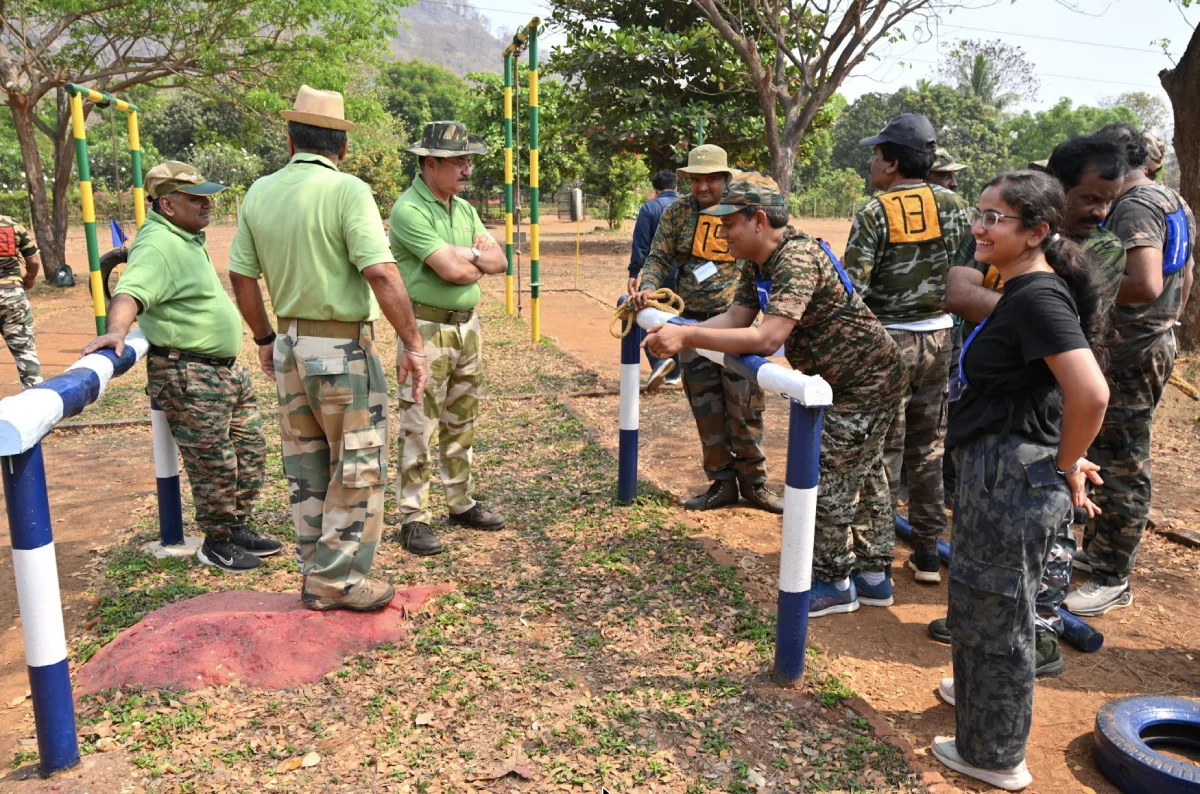
Invest in experiences that require actual collaboration, not passive attendance. A team lunch requires nothing from anyone except showing up. An outdoor problem-solving challenge requires people to communicate, rely on each other, and see colleagues handle pressure and that shared experience tends to build the kind of connection that carries back into daily work. This is a large part of why organisations bring their teams to a setting like our Kolad campus rather than a hotel banquet hall the engagement comes from doing something together, not from being served something together.
Recognise effort specifically, not generically. “Great job, team!” in an all-hands email barely registers. Specific recognition naming what someone actually did and why it mattered is disproportionately more effective and costs nothing.
Create space for honest feedback loops. Engagement erodes fastest in organisations where people feel unheard. Regular, structured opportunities for employees to flag friction without it disappearing into a suggestion box matter more than most companies assume.
Why Outdoor and Experiential Formats Move the Needle Differently
There’s a reason experiential team engagement outbound training, structured outdoor challenges, adventure-based programs tends to outperform conventional engagement initiatives on longevity of impact. Passive engagement activities (a party, a catered lunch, a talk) create a pleasant memory. Active, shared-challenge experiences create a shared story. Employees who’ve built a raft together, or navigated a blindfolded obstacle course relying on a colleague’s instructions, reference that experience months later in completely unrelated work conversations “remember when you talked me through that course, let’s do the same thing here.” That kind of call back almost never happens after a catered lunch. At Empower, we see this pattern consistently across the 650+ organisations we’ve worked with. The programs that get referenced back in performance reviews, in team retrospectives, in casual conversation months later, are almost always the experiential ones not because they were more expensive, but because they required real participation rather than passive attendance.
Engagement Isn’t a One-Time Event
The biggest mistake organisations make is treating engagement as an annual event one offsite, one big initiative, then twelve months of business as usual. Engagement is closer to fitness than to a vaccine; it needs consistent, smaller reinforcement, not one large dose. That doesn’t mean you need a monthly outbound program, but it does mean the culture built during a bigger intervention needs deliberate reinforcement managers referencing lessons from the offsite in regular one-on-ones, recognition tied back to behaviours the team identified as important during a program, leadership visibly modelling what was discussed.
Measuring Whether It’s Actually Working
Engagement is notoriously hard to measure directly, but a few practical indicators tend to be reliable:
• Voluntary participation rates, in optional company initiatives, which tend to rise when people genuinely feel connected
• Internal mobility and referral rates, since engaged employees are more likely to recommend the company and to want to grow within it rather than leave
• Manager-level pulse checks, done consistently rather than as an annual survey, tend to surface problems while they’re still fixable
• Attrition specifically among high performers, which is a sharper signal than overall attrition, since disengaged low performers often stay regardless
Where to Start If You’re Overwhelmed
If your organisation hasn’t done any structured engagement work before, resist the urge to solve everything at once. Pick one team or department showing the clearest signs of disengagement, run a genuinely well-designed intervention ideally one involving real collaboration and a facilitated debrief, not just a fun outing and measure the specific indicators above before and after. A focused pilot that visibly works will do more to build internal buy-in for a broader engagement strategy than a company-wide initiative that gets watered down trying to please everyone. Engagement isn’t about making work feel like a party. It’s about making people feel like their work, and the people they do it with, actually matter. Everything else is decoration.

Transforming teams from ordinary to extraordinary, one adventure at a time!

Office Outing Places in Pune: Empower Activity Kolad
If you’ve typed “office outing places in Pune” or “outbound training near me” into a search bar recently, you’ve probably noticed the results split into two very different categories — resorts built for leisure, and a much smaller list of places actually built for corporate training. Empower Activity Kolad sits firmly in the second category, and this guide explains exactly why, what experiential learning camps actually involve, and how Empower compares against the other top corporate training companies in Pune.
How Offsites Transform Communication and Collaboration
Why the Best Teams Are Built Outside the Office In today’s fast-moving corporate environment, communication gaps and collaboration challenges are among the biggest obstacles to organizational success. Teams often work in silos, meetings become transactional, and...
Team Building Activities that Truly Transform the Workplace
Beyond Bonding: Team Building Activities That Truly Transform the Workplace In many organizations, team building is often treated as a once-a-year event a break from routine filled with games, laughter, and temporary excitement. While these moments may create...

Address:
Camp Office: 263, Sutarwadi, Taluka Roha, Distt Raigad, Maharashtra – 402 304.
Camp Site: Village Kudli, 14 Km Off Kolad, Taluka Roha, Distt Raigad, Maharashtra – 402 308.
Office Hours: 8 am to 8 pm