
Team Building vs. Team Bonding: What’s the Real Difference?
HR teams use these two terms interchangeably so often that most people assume they’re the same thing planned by different vendors. They’re not, and the distinction actually matters when you’re deciding how to spend a limited training budget.

The Short Version
Team bonding is about relationships. Team building is about performance. Bonding activities help people like each other and feel comfortable together. Building activities are specifically designed to improve how a team functions communication, trust, decision-making, conflict resolution under real working conditions. A team can bond beautifully over dinner and drinks and still be dysfunctional at handling a tight deadline together. The two aren’t mutually exclusive, but they’re not the same intervention, and treating them as interchangeable is why a lot of “team building” budgets get spent on what is really just team bonding.
Why This Distinction Gets Blurred
Most vendors selling corporate offsites don’t make this distinction clear, because bonding activities are easier and cheaper to run a nice dinner, a games night, a resort stay with some casual activities. Genuine team building requires structured challenges and, critically, skilled facilitation to translate what happens during the activity into something the team can actually apply back at work. That’s a fundamentally different (and more demanding) service to deliver, which is part of why it’s less commonly offered well.
What Team Bonding Actually Looks Like
Team bonding activities are typically low-structure, social, and relationship-focused:
- Casual dinners and off-site meals
- Games nights or trivia competitions with no connection to work behaviours
- Leisure trips with free time built in
- Informal social mixers designed to help people get to know each other outside work roles
These have real value. Teams that know each other personally hobbies, family situations, sense of humour tend to communicate with more patience and goodwill day to day. But bonding alone doesn’t teach a team how to handle a genuine disagreement about priorities, or how to recover when a project plan falls apart under pressure.
What Team Building Actually Looks Like
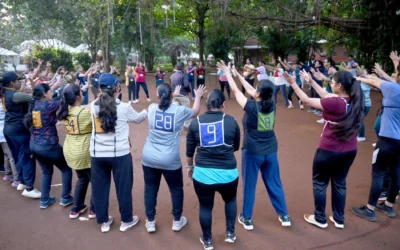
Team building activities are structured, often physically or mentally challenging, and specifically designed to surface real behavioural patterns:
- Problem-solving challenges with real constraints (time, resources, communication restrictions)
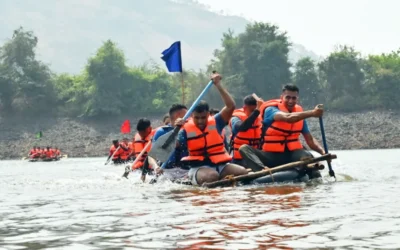
- Physical challenges that require coordination and trust, like rope courses or raft building
- Leadership rotation exercises that force different team members into decision-making roles
- Structured debriefs that connect what happened during the activity to how the team operates at work
The critical differentiator is the debrief. Without a facilitated conversation linking the activity back to real workplace behaviour, even a genuinely challenging exercise is just an athletic version of a bonding activity memorable, maybe, but not necessarily useful.
A Practical Example of the Difference
Take two versions of the same corporate offsite. In version one, a team spends a day at a resort playing casual lawn games, followed by dinner and drinks. Everyone has a great time, people who didn’t know each other well now do, and the trip is remembered fondly. That’s bonding.
In version two, the same team spends part of the day on a structured raft-building challenge with a time limit and limited materials, followed by a facilitator-led debrief where the group discusses who took charge, who hesitated, where communication broke down, and how that maps onto how the team currently handles tight deadlines at work. That’s building. Notice the two aren’t opposites a well-run day often includes both, with structured challenges in the morning and relaxed bonding time in the evening. The mistake is assuming an entire day of the second kind of activity will automatically happen just because you booked “team building” with a vendor, when in practice you got the first.
Which One Does Your Team Actually Need?
This depends entirely on the problem you’re trying to solve, and it’s worth being honest with yourself about which situation you’re in:
Choose bonding-focused programs when: the team is relatively new, relationships are still forming, and the primary goal is simply making people comfortable working together socially. Bonding is also the right call after genuinely difficult period layoffs, a demanding project cycle when people need rest and reconnection more than another challenge.
Choose building-focused programs when: there’s a specific, identifiable performance issue communication breakdowns, unclear leadership, decision-making bottlenecks, unresolved conflict that’s actually affecting how the team works. If you can name the problem, a structured team building program with proper facilitation is far more likely to move the needle than another dinner.
Choose a combination when: you’re running an annual offsite and want both outcomes some structured challenge-based sessions for real skill-building, balanced with relaxed time for relationship-building. This is, honestly, how most well-run corporate offsites are actually structured, including most of the programs we run at Empower for organisations visiting our Kolad campus.
Why the Debrief Is the Real Dividing Line
If there’s one thing to take away from this distinction, it’s that the debrief the structured, facilitator-led conversation after an activity is what actually turns bonding into building. You can run the exact same physical challenge with two different groups, and if one gets a skilled debrief connecting the experience to real workplace patterns and the other doesn’t, you’ll get two completely different outcomes from the identical activity. One group leaves with a fond memory. The other leaves with a specific, actionable insight about how they work together.
Getting the Balance Right
If you’re planning your next corporate offsite and unsure which direction to lean, start by naming the actual problem you’re hoping to solve. “We want the team to feel closer” points toward bonding. “We keep missing deadlines because decisions get stuck” points toward building. Most organisations genuinely need both over time, but conflating them expecting a bonding-style dinner to fix a building-style problem is one of the most common and avoidable ways corporate offsite budgets get wasted.
One Last Practical Tip
When you’re briefing a vendor, use these two words deliberately rather than defaulting to “team building” as a catch-all term for anything social. Tell them plainly whether you’re looking for relationship-focused bonding, performance-focused building with structured debriefs, or a genuine mix of both across the day. A provider who understands this distinction will ask better questions before proposing an itinerary, and you’ll get a program that’s actually built around what your team needs, rather than a generic package that happens to have the right label attached to it.

Transforming teams from ordinary to extraordinary, one adventure at a time!
How to Improve Employee Engagement beyond Pizza Parties and Perks
Most employee engagement strategies fail for the same reason: they treat engagement as something you can buy with snacks, swag, and the occasional office party. Free lunch on Fridays is nice. It is not a strategy. If your organisation is seeing disengagement quiet...

Office Outing Places in Pune: Empower Activity Kolad
If you’ve typed “office outing places in Pune” or “outbound training near me” into a search bar recently, you’ve probably noticed the results split into two very different categories — resorts built for leisure, and a much smaller list of places actually built for corporate training. Empower Activity Kolad sits firmly in the second category, and this guide explains exactly why, what experiential learning camps actually involve, and how Empower compares against the other top corporate training companies in Pune.
15 Best Team Building Activities for Employees That Actually Work
Search "team building activities" and you'll get a thousand lenticels recycling the same fifteen ideas trust falls, egg drops, human knots with no explanation of why they'd help your specific team, or how to run them so they don't feel forced. This isn't that list....

Address:
Camp Office: 263, Sutarwadi, Taluka Roha, Distt Raigad, Maharashtra – 402 304.
Camp Site: Village Kudli, 14 Km Off Kolad, Taluka Roha, Distt Raigad, Maharashtra – 402 308.
Office Hours: 8 am to 8 pm