
What Is Corporate Outbound Training? A Complete Guide for HR and L&D Teams
If you’ve been asked to “look into outbound training” for your organisation, you’ve probably already noticed that the term gets used loosely sometimes for a picnic with a few games bolted on, sometimes for a genuinely structured leadership intervention. That confusion is common and it’s worth clearing up before you started comparing vendors or budgeting for a program.
The Actual Definition
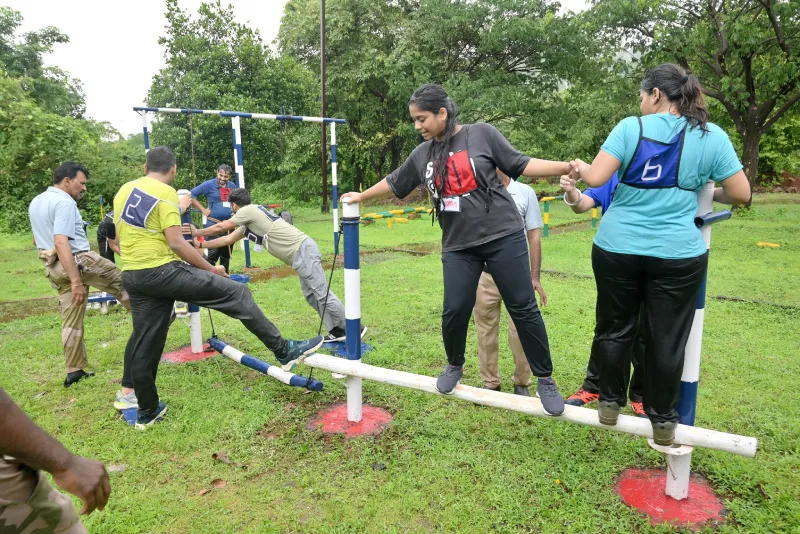
Corporate outbound training is a form of experiential learning where employees are taken out of their regular work environment and put through a series of physical, outdoor, and often team-based challenges designed specifically to surface and improve workplace behaviours like communication, trust, leadership, and decision-making under pressure.
The key word there is “designed.” A trekking trip is not outbound training. A day of ziplining is not outbound training. Those are recreational activities, and there’s nothing wrong with them, but they don’t come with the structure that makes outbound training useful for a business. What separates outbound training from a fun outing is the debrief the facilitated conversation after each activity that connects what just happened on the course to how the team behaves back at their desks.
Where the Concept Comes From
Outbound training has military and outdoor-education roots. The idea that people learn faster and retain more when they’re physically and mentally engaged in solving a real problem rather than sitting through a lecture has been studied extensively, most notably through David Kolb’s experiential learning cycle: concrete experience, reflective observation, abstract conceptualisation, and active experimentation. In plain terms: do something, reflect on it, understand why it worked or didn’t, then try it again differently.
At Empower Activity Camps, this cycle is built into every single activity we run on our 50acre campus near Kolad, on the Mumbai-Goa highway. A team doesn’t just complete a rope course and move on they complete it, sit down with a facilitator, unpack what happened (who took charge, who hesitated, where communication broke down), and then apply that insight to the next challenge.
What Actually Happens During a Program?
A typical corporate outbound training day isn’t a random string of games. It usually follows a loose arc:
Warm-up and trust-building activities low-stakes exercises that get a group comfortable working together, especially useful when teams include people who rarely interact day-today, like cross-departmental groups or newly merged teams.
Core challenge modules these are built around the specific goal of the program. If the objective is leadership visibility, the activities are structured so that leadership naturally has to emerge (someone has to make a call, someone has to take responsibility for a mistake). If the goal is communication, activities often restrict how team members can talk to each other, forcing them to find new ways to coordinate.
Structured debriefs this is the part most generic team outings skip entirely, and it’s the part that actually creates change. A trained facilitator draws out specific observations: “Notice how the group went quiet when the first attempt failed what happened there?” These conversations are where abstract feedback becomes something a team can actually recognise and act on.
Application planning better programs end with participants identifying one or two specific things they’ll do differently at work, not just a vague “great day, felt very motivated” sentiment that fades by Monday.
Who Actually Needs This
Outbound training tends to get the most value for:
- Newly formed or merged teams who haven’t built working trust yet
- Leadership groups preparing for expanded responsibility
- Teams coming out of a stressful period a tough quarter, a reorg, a period of high attrition where morale and cohesion have taken a hit
- Organisations doing induction for large batches of new hires who need to bond quickly with colleagues and understand company culture experientially rather than through a slide deck
It’s less useful, frankly, as a one-off “reward” outing disconnected from any real objective. The value comes from tying the program to something specific happening in the business.
Why Location and Facilitator Quality Actually Matter
Not all outbound training delivers the same results, and the two biggest variables are where it happens and who’s running it.
Location matters because urban venues hotel conference rooms, resort banquet halls carry the same distractions your team is trying to escape: phone signal, room service interruptions, the temptation to duck out for a “quick call.” A genuinely remote, natural setting removes that safety net and forces real presence. That’s part of why we built Empower’s campus in Kolad specifically 2.5 hours from Mumbai and Pune, far enough to feel like a real break, close enough not to eat up a week of travel.
Facilitator quality matters even more. A facilitator who’s only ever run corporate workshops can guide a discussion, but there’s a different quality to a session run by someone who has actually led people through consequential, high-pressure situations. Our facilitators are senior Army veterans with real command experience people who’ve had to make fast decisions with incomplete information and lead teams through genuine adversity. That background shapes how they read a group and where they push during a debrief.
What to Ask Before You Book a Program
If you’re evaluating outbound training providers, a few questions separate the serious operators from the ones running glorified picnics:
1. Will the program be customised to our specific team dynamics, or is this a fixed package everyone gets?
2. What does the debrief structure actually look like is there a trained facilitator, or just an activity coordinator?
3. Can you show examples of past programs run for organisations similar to ours?
4. What’s the plan for translating the day’s learning into something we can measure back at work?
A provider who can’t answer these clearly is probably selling you an adventure day with a training label on it.
The Bottom Line
Corporate outbound training, done properly, is not a break from work it’s a different, often more honest, way of doing work. It exposes how a team actually functions under pressure, gives people a shared experience to reference later, and critically pairs every activity with a conversation that turns the experience into something usable. Done poorly, it’s just an expensive day out. The difference almost always comes down to design and facilitation. If you’re weighing this up for your organisation, it’s worth starting with the specific problem you’re trying to solve communication, leadership visibility, trust after a reorg and building the program backward from there, rather than picking activities first and hoping the outcomes follow.

Transforming teams from ordinary to extraordinary, one adventure at a time!
Summer Camp in Kolad near Mumbai & Pune: A Perfect Blend of Adventure, Learning and Growth for Kids
Summer vacations are more than just a break from school—they are an opportunity for children to explore, learn, and grow beyond classrooms. If you’re searching for a safe, enriching, and adventure-filled summer camp near Mumbai or Pune, Kolad stands out as an ideal...

Beyond Policies & Perks: Why Corporate Culture Defines Success and How Outbound Training Strengthens It
Corporate culture isn’t just an internal value — it’s a strategic advantage. Organizations with a strong, positive work culture attract better talent, achieve higher productivity, retain employees longer, and exhibit greater innovation. In fact, several studies show...
5 Principles of Experiential Learning? A Fresh Perspective on How People Truly Learn
Experiential learning, popularized by educational theorist David Kolb, is based on the idea that people learn best through direct experience, reflection, and application. But beyond the theory, this approach has become the foundation of modern corporate training, outdoor learning, and leadership development programs.

Address:
Camp Office: 263, Sutarwadi, Taluka Roha, Distt Raigad, Maharashtra – 402 304.
Camp Site: Village Kudli, 14 Km Off Kolad, Taluka Roha, Distt Raigad, Maharashtra – 402 308.
Office Hours: 8 am to 8 pm