
7 Signs Your Team Urgently Needs Outbound Training
Most organisations wait too long to invest in outbound training, usually because the signs of a struggling team get explained away as normal workplace friction “everyone’s just busy,” “it’s a tough quarter,” “that’s just how meetings go here.” Below are seven patterns worth paying closer attention to, because on their own they seem manageable, but together they usually point to a team that would benefit significantly from a structured intervention.

1. Decisions Take Longer Than They Should
If your team routinely circles the same discussion across multiple meetings without landing on a decision, that’s rarely a knowledge problem, it’s usually a trust or ownership problem. People are hesitant to commit to a call, either because they don’t trust their judgement will be backed by the group, or because it’s genuinely unclear who has the authority to decide. Outbound training exposes this pattern quickly, because time-boxed physical challenges force decisions to happen fast, and the debrief afterward tends to surface exactly why the team hesitates insight that’s much harder to extract from a slow-moving project retrospective.
2. The Same One or Two People Dominate Every Discussion
When meetings are consistently led by the same voices while others stay quiet, it’s tempting to assume the quiet ones simply have less to contribute. In our experience running programs for over 650 organisations, that assumption is wrong far more often than its right. Structured activities that rotate leadership responsibility or restrict communication in specific ways routinely reveal capable people who simply don’t get space to lead in the usual office dynamic. If this pattern sounds familiar, it’s worth treating as a signal, not a fixed trait of your team.
3. Cross-Departmental Collaboration Feels like Pulling Teeth
If getting two departments to work together smoothly requires constant management intervention, that’s usually a sign that the relationships between those groups were never actually built people know of each other, but haven’t done anything together that required real coordination. Shared-challenge activities, particularly ones that deliberately mix people who don’t normally work together, tend to build the kind of working familiarity that months of scheduled cross-functional meetings often fail to produce.
4. Recent Organisational Change Has Left the Team Unsettled
Mergers, restructuring, leadership changes, or a wave of new hires all disrupt the informal trust and communication patterns a team has built over time even if everyone involved is professional and well-intentioned. This kind of disruption often shows up as subtle hesitancy: people double-checking things that used to be assumed, communication becoming more formal and less direct, decisions taking longer because the old informal shortcuts no longer apply. Outbound training is particularly effective here because it deliberately rebuilds trust and working rhythm faster than simply waiting for time to smooth things over.
5. Conflict Gets Avoided Instead of Resolved
A team with zero visible conflict isn’t necessarily a healthy one often it’s a team where disagreement has been pushed underground because it doesn’t feel safe to surface. This tends to show up as passive resistance: agreement in meetings followed by lack of follow-through, decisions quietly undermined rather than openly challenged. Structured outdoor challenges create low-stakes situations where disagreement is almost unavoidable over strategy, over roles, over how to solve a problem giving the team practice at working through friction productively, with a facilitator there to guide the conversation rather than let it fester unaddressed.
6. New Hires Take Too Long to Feel Like Part of the Team
If new employees consistently describe feeling like outsiders for months after joining, that’s a signal your on boarding process is transferring information but not building actual belonging. Structured induction outbound programs shared physical challenges, guided team activities in a new environment tend to accelerate this integration significantly, because shared experience builds familiarity faster than sitting through orientation slides and scheduled coffee chats ever will.
7. Engagement Metrics Are Dropping but No One Can Pinpoint Why
Sometimes the signs aren’t dramatic just a slow drift downward in participation, energy, and voluntary initiative that’s hard to trace to any single cause. This is often the hardest pattern to act on, precisely because it’s diffuse. In these cases, a well-facilitated outbound program can serve almost as a diagnostic tool as much as a solution the activities and debrief tend to surface specific friction points (a leadership style that’s quietly frustrating people, a communication gap between two team members, unclear role boundaries) that a standard engagement survey rarely captures with the same clarity.
Why These Signs Get Missed for So Long
Most of these patterns develop slowly and get absorbed into “how things are” long before anyone flags them as a problem worth addressing. Managers are often too close to the day-to-day to notice the drift, and by the time it shows up clearly in performance numbers or attrition, the underlying dynamics have usually been unhealthy for months, sometimes longer.
What to Do If You’re Recognising Several of These
If two or three of these signs sound familiar, it’s worth treating that as a genuine signal rather than something to monitor further. The good news is that these patterns hesitant decision-making, uneven participation, avoided conflict, weak cross-team relationships are precisely what well-designed outbound training is built to address directly, because it puts a team into real (if controlled) situations where these exact behaviours have to show up and get worked through, with a skilled facilitator guiding the process.
The mistake to avoid is waiting for a “big enough” crisis to justify the investment. Teams showing early signs of these patterns tend to respond faster and more durably to intervention than teams where the dysfunction has been allowed to calcify for a year or two. At Empower, some of our most effective programs have been for teams that came to us describing their situation as “nothing dramatic, just something feels off” because catching it at that stage means the fix is usually faster, and the team is more receptive, than if the same issues are left to compound.
If any of the above sounds like your team right now, that discomfort is worth paying attention It’s usually the earliest, most useful signal you’ll get.

Transforming teams from ordinary to extraordinary, one adventure at a time!

Team Building Activities that actually Improve Productivity
Empower Activity Camps offers structured team building activities for employees that integrate experiential learning, strategic reflection, and performance alignment.
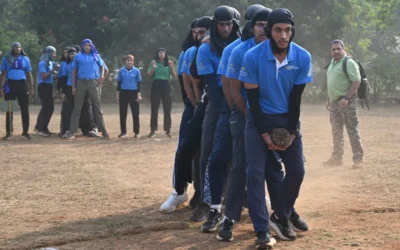
The ROI of Experiential Learning: Is Outbound Training Worth It?
Ready to Evaluate the Real ROI for Your Organization? If your organization is committed to measurable growth, stronger leadership pipelines, and sustainable team performance, it may be time to rethink how learning is delivered.
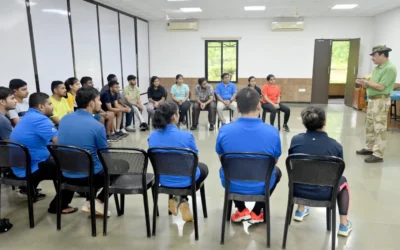
Communication & Conflict Resolution Training: Building Stronger, High-Trust Teams
In every organization, communication is the backbone of performance—and conflict, when unmanaged, becomes one of the biggest barriers to productivity. Differences in opinions, work styles, and expectations are natural, but the way teams handle these differences...

Address:
Camp Office: 263, Sutarwadi, Taluka Roha, Distt Raigad, Maharashtra – 402 304.
Camp Site: Village Kudli, 14 Km Off Kolad, Taluka Roha, Distt Raigad, Maharashtra – 402 308.
Office Hours: 8 am to 8 pm