
5 Principles of Experiential Learning? A Fresh Perspective on How People Truly Learn
Traditional classroom learning alone can’t keep up with the demands of real-life problem-solving, teamwork, and leadership. That’s where Experiential Learning becomes a powerful alternative—an approach that transforms “knowing” into “doing” and “doing” into “understanding.”
Experiential learning, popularized by educational theorist David Kolb, is based on the idea that people learn best through direct experience, reflection, and application. But beyond the theory, this approach has become the foundation of modern corporate training, outdoor learning, and leadership development programs.
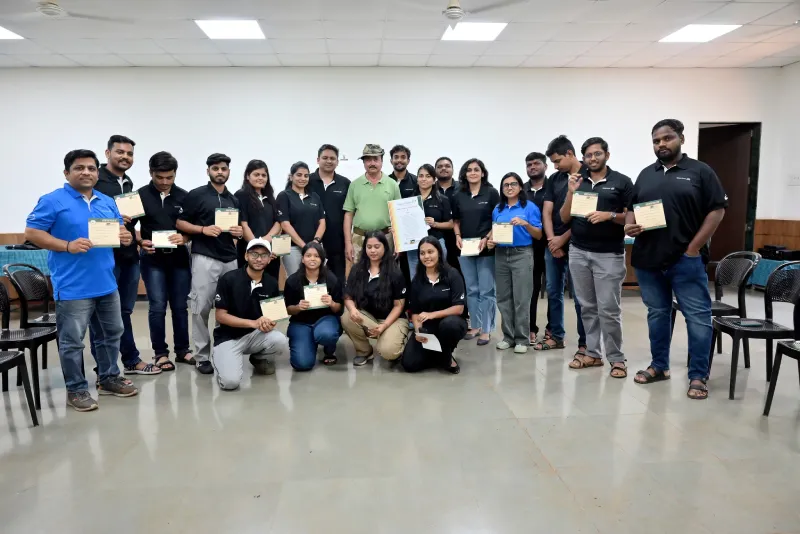
Here, we break down the five core principles of experiential learning, explained in a practical and human-centric way—so you understand not only WHAT they are, but HOW they work in real learning environments.
1. Learning Happens Through Experience — Not Just Information
The first and most fundamental principle is simple:
People learn best when they DO something.
Whether it’s navigating a challenge, solving a task, or participating in a physical activity, the brain retains information better when the body is engaged.
Why this matters:
- Engagement activates multiple senses
- Learning becomes memorable
- Participants form emotional connections with the activity
This is why activities like rope courses, problem-solving simulations, and team challenges outperform lectures.
2. Reflection Turns Activity Into Insight
Experience alone is not enough.
Learning becomes meaningful when participants reflect on their actions.
Reflection allows individuals to:
- Recognize what they did successfully
- Identify mistakes
- Discover patterns
- Understand the “why” behind outcomes
Structured debriefs, guided discussions, and journaling sessions transform simple activities into deep learning experiences.
3. Learners Must Actively Participate
Experiential learning is NOT passive.
There is no sitting back. No merely listening.
Participants must engage physically, emotionally, and intellectually.
Active participation builds:
- Confidence
- Ownership
- Responsibility
- Collaboration
When people “own” the learning process, their mindset shifts and the results last much longer.
4. Real-World Application Makes Learning Stick
For learning to matter, participants must connect experiences to real scenarios.
This principle bridges the gap between training and actual performance.
For example:
- A team-building obstacle course teaches communication under pressure
- A leadership simulation mirrors workplace decision-making
- An outdoor challenge represents real-life problem solving
This approach strengthens long-term retention and ensures learning doesn’t end when the activity ends.
5. Real-World Application Makes Learning Stick
For learning to matter, participants must connect experiences to real scenarios.
This principle bridges the gap between training and actual performance.
For example:
- A team-building obstacle course teaches communication under pressure
- A leadership simulation mirrors workplace decision-making
- An outdoor challenge represents real-life problem solving
This approach strengthens long-term retention and ensures learning doesn’t end when the activity ends.
5. Continuous Experimentation Drives Improvement
Experiential learning is a loop—not a one-time event.
Participants:
- Try
- Learn
- Adjust
- Try again
This cycle creates resilience, adaptability, and growth—skills essential in today’s workplace.
When individuals are encouraged to experiment, they begin embracing challenges instead of avoiding them.
A Different Way to See Experiential Learning
Most people think experiential learning is about “activities.”
But its deeper purpose is transformation.
It builds:
- Self-awareness
- Team trust
- Adaptive leadership
- Strategic thinking
This approach taps into natural human behavior—the desire to explore, experiment, reflect, and improve.
Today, organizations that implement experiential learning outperform others in collaboration, productivity, and decision-making.
How Empower Activity Camps Applies These Principles
Empower Activity Camps, led by Senior Army Veteran Officers, has built its entire training methodology on these principles.
Through experiential learning, Empower helps teams:
- Strengthen communication under real challenges
- Build trust through shared outdoor tasks
- Learn leadership through action, not theory
- Reflect meaningfully through structured debriefs
- Apply insights directly to workplace culture
From Outbound Training to Leadership Development programs, every module is designed to turn experiences into powerful learning outcomes.

Transforming teams from ordinary to extraordinary, one adventure at a time!
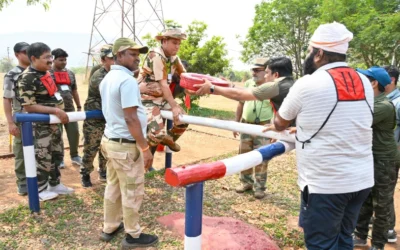
How Offsites Transform Communication and Collaboration
Why the Best Teams Are Built Outside the Office In today’s fast-moving corporate environment, communication gaps and collaboration challenges are among the biggest obstacles to organizational success. Teams often work in silos, meetings become transactional, and...
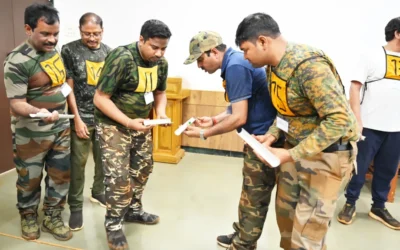
Team Building Activities that Truly Transform the Workplace
Beyond Bonding: Team Building Activities That Truly Transform the Workplace In many organizations, team building is often treated as a once-a-year event a break from routine filled with games, laughter, and temporary excitement. While these moments may create...
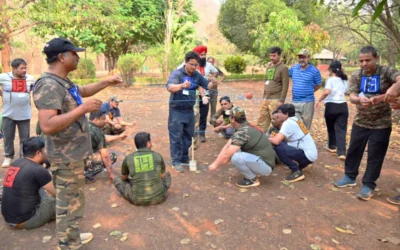
How Corporate Team Building Outbound Training Creates Stronger Leaders, Smarter Teams, and Lasting Workplace Transformation
corporate team building outbound training stands apart from conventional learning methods. When designed with experiential learning principles, outbound programs create measurable behavioral shifts that improve team performance, strengthen workplace relationships, and accelerate leadership development.

Address:
Camp Office: 263, Sutarwadi,
Taluka Roha, Distt Raigad, Maharashtra – 402 304.
Camp Site: Village Kudli,
14 Km Off Kolad, Taluka Roha, Distt Raigad, Maharashtra – 402 308.
Office Hours: 8 am to 8 pm